

Disclaimer: This post contains affiliate links. I earn a small commission from qualifying purchases at no extra cost to you.
Building a self-care night routine is the absolute secret to waking up feeling like a human being instead of a caffeinated zombie.
Let’s be honest: most evenings involve staring at a phone until the eyes glaze over, promising to “go to bed soon,” only to realize it’s midnight and the body is still wired. That mindless scroll isn’t a routine — it’s a rut.
And the cost of that rut is real. According to the Sleep Foundation, adults who follow a consistent pre-sleep routine fall asleep faster, sleep more deeply, and report significantly better mood the following day. The difference isn’t a new supplement or a $200 pillow. It’s intention.
A true night routine is a “closing ceremony” for your day. It’s not about performing relaxation for Instagram or following a 12-step routine that requires a spa budget. It’s about reclaiming the quiet that the day took from you — with whatever 10, 20, or 30 minutes you actually have.
No fancy products or hours of free time required. Just a little intention to turn your evening from “bleh” to genuinely restorative.
The Quick Guide
← Swipe to see your custom routine →
| If your day was… | The Vibe | The 10-Min Win | Why it works |
|---|---|---|---|
| High Stress | Mental Reset | Brain Dump Journaling | Closes “open loops” in the brain |
| Socially Drained | Quiet & Cozy | No-screen reading | Stops external social noise |
| Physically Exhausted | The Pamper | Sensory Shower | Heat lowers muscle tension |
| Brain Fog | Scene Setter | 5-minute surface tidy | Less visual clutter = calm mind |
| Total Meltdown | Emergency Reset | 1-min deep breathing | Resets the nervous system fast |
Step 1: Set the Scene (It’s All About the Vibe)
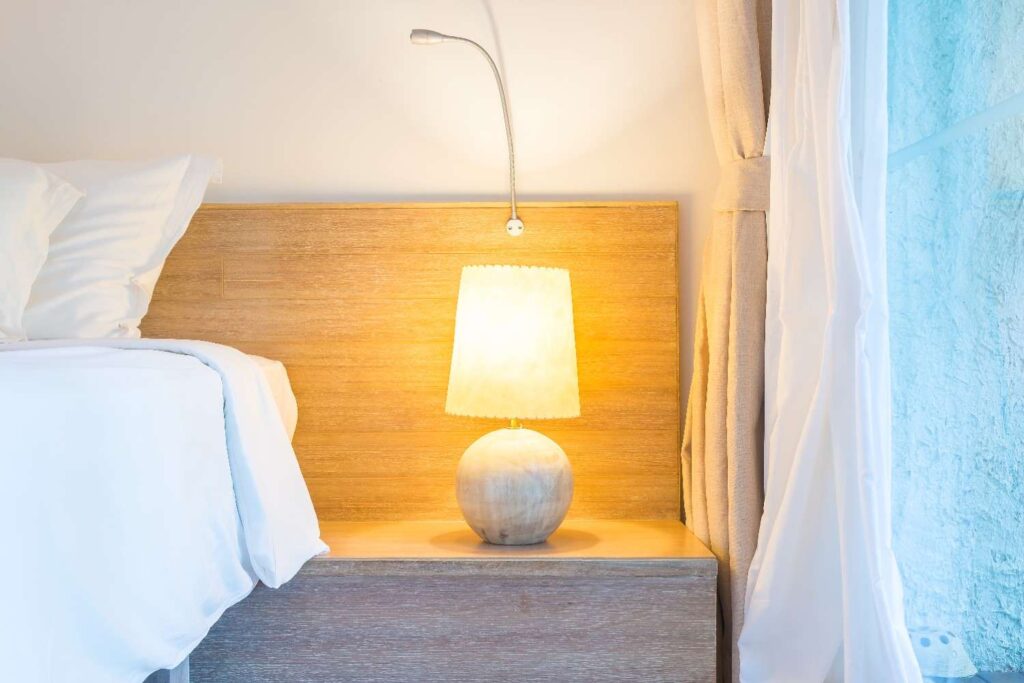
Before doing anything else, the environment needs to shift. The body takes cues from the space around it — and a space that screams “unfinished to-do lists” cannot produce a restful mind.
This isn’t about having a Pinterest-perfect bedroom. It’s about removing the visual and sensory inputs that keep the brain in “problem-solving mode” long after the workday ends.
Start with a 5-Minute Tidy
This is not a deep clean. The goal is to lower what researchers call cognitive load — the mental energy spent processing visual clutter. Clear the coffee cup from the bedside table, put the throw pillows back, and move the pile of clothes off the chair. That’s it.
Studies on environmental psychology consistently show that cluttered spaces elevate cortisol levels, the stress hormone most responsible for keeping people awake at night.
A little visual order creates a lot of mental calm. It takes five minutes and costs nothing.
Engage All Five Senses Intentionally
Next, make your space feel relaxing.
- Sight: Dim the overhead lights. Turn on a lamp or some fairy lights. Harsh lighting is the enemy of chill vibes.
- Smell: This is a powerful one. Light a scented candle with lavender or sandalwood, or diffuse some essential oils. A calming scent can instantly lower your stress levels. A simple soy wax candle or an essential oil diffuser can make a big difference without being overwhelming.
- Sound: Put on some background noise that isn’t the TV. A calming playlist, some lo-fi beats, or even a white noise track can work wonders.
- Touch: Swap into comfortable clothes before starting the routine. This physical change acts as a tangible signal that “work mode” is over. Soft fabrics, loose fits, anything that communicates to the body that it’s off the clock.
This entire setup should take under 10 minutes. Think of it as building a mini sanctuary — not as a luxury, but as a practical tool for better sleep.
Step 2: Do a Digital Sunset (Your Most Important Move)
This is the step most people skip because it feels the hardest. It’s also the one with the most dramatic results.
The human brain was not designed to process social media conflict, work emails, and global news in the final hour before sleep. When it does, the stress hormones it produces take an average of 90 minutes to fully metabolize. Meaning: even if the phone goes down at 10 PM after a stressful scroll, the body is still neurochemically wound up past 11:30.
What Blue Light Actually Does
Beyond the content, the light itself is a problem. Blue light — emitted by all screens — suppresses melatonin production by up to 50%, according to research published in the Journal of Applied Physiology. The body reads blue light as daylight and literally delays its sleep signals. Night mode on the phone helps slightly, but doesn’t eliminate the effect.
How to Actually Do This
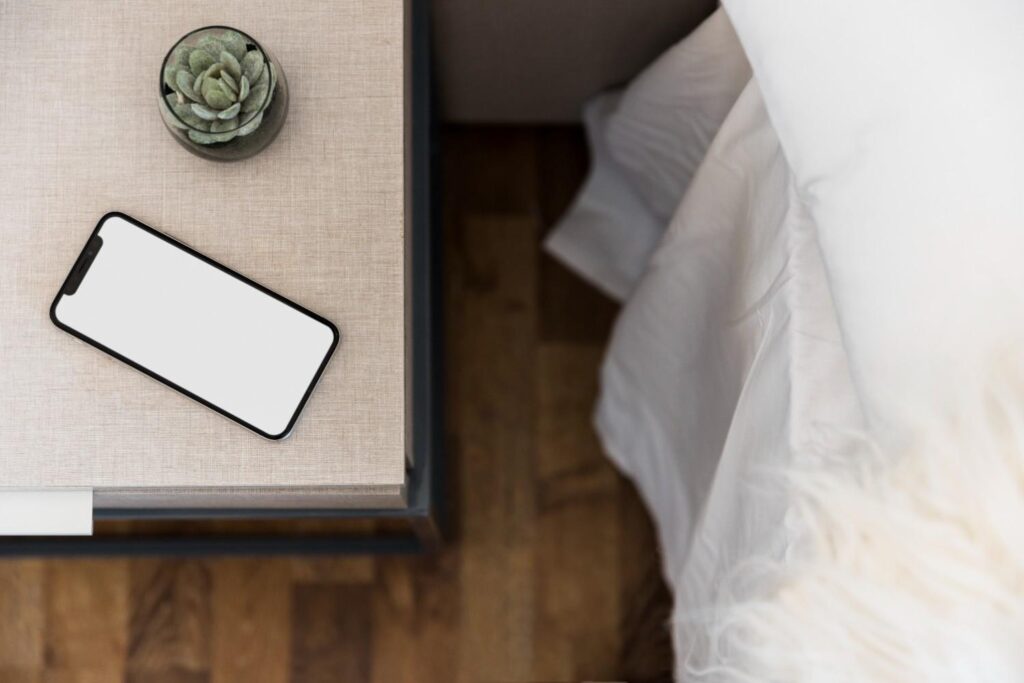
Pick a time — 60 minutes before the intended sleep time is the research-backed recommendation — and make it an official phone curfew. Put the phone on Do Not Disturb and charge it outside the bedroom if at all possible.
It feels extreme for about two days. Then it feels like relief.
Anticipate the fidgety feeling. The hands are used to reach for a screen. Have a replacement ready:
- Keep a fiction book on the nightstand. Getting absorbed in a story is the closest thing to a legal brain vacation.
- Have a journal and pen accessible. A dot grid journal works well for brain dumping, loose planning, or just processing the day in words.
- Allow boredom. This sounds counterintuitive, but sitting with quiet boredom for even five minutes is genuinely restorative. The brain uses that space to consolidate memories, process emotions, and solve problems it was too busy to touch during the day.
This single change — a consistent digital sunset — is cited by sleep researchers as the highest-impact habit shift available without medication or supplements.
Step 3: Choose Your Wind-Down Activity (Keep It Simple)

Here is where most night routine advice goes wrong: it hands a 12-step checklist to someone who has 20 minutes and is already tired. The result is a feeling of failure before bed, which is the opposite of the goal.
The principle is simple: choose one activity per night based on what the body and mind are actually asking for.
Option A: The Pamper Route
Best for: feeling depleted, wanting to feel cared for, low-energy evenings
This isn’t about an elaborate beauty routine. It’s about using physical self-care as a way to shift attention from the mind to the body — present, sensory, slow.
- Take a sensory shower: Use a great-smelling body wash and focus on the warm water, not your mental to-do list.
- Do a face mask: A 10-minute mask can feel like a mini-facial and forces you to just sit still. The Hanhoo Coconut Milk Illuminating Sheet Mask is an affordable option that feels luxurious.
- Use a gua sha or jade roller: A little facial massage feels luxurious and can release tension in your jaw. A basic rose quartz gua sha is easy to find and feels great when used with your favorite serum.
Option B: The Cozy & Quiet Route
Best for: social exhaustion, overstimulation, extroverts and introverts alike after a full day
- Fiction reading: Non-fiction keeps the analytical brain active. Fiction allows it to rest in someone else’s story. Even 20 pages of an absorbing novel can meaningfully reduce stress markers, according to research from the University of Sussex.
- Calming podcast: Choose something genuinely soothing — slow-paced, gentle topics, no news. Sleep With Me podcast (deliberately boring bedtime stories) or nothing-episodes of conversational shows work well.
- Light stretching: Not a workout. Just 5–10 minutes of gentle floor stretching targeting the hips, neck, and lower back — the areas that hold the most tension from sitting. A basic yoga mat makes floor time more comfortable and creates a small ritual space.
- Herbal tea ritual: Brewing and drinking a cup of chamomile, passionflower, or valerian root tea slowly and without a screen is a complete wind-down practice on its own.
Option C: The Mental Reset Route
Best for: anxious minds, busy brains, days that feel unfinished
The anxious brain struggles to sleep because it senses unfinished business. These practices work by genuinely closing those mental loops — not just suppressing them.
5-4-3-2-1 grounding: Name 5 things you can see, 4 you can touch, 3 you can hear, 2 you can smell, 1 you can taste. This brings attention fully into the present moment and is particularly effective for anxiety-driven sleeplessness.
Brain dump journaling: Write every thought, worry, task, and random idea onto the page. The goal isn’t insight — it’s transfer. Once it’s on paper, the brain releases its grip on it. Keep a journal next to the bed specifically for this purpose.
Tomorrow’s top 3: Write down the three most important things to do tomorrow. Just three. This is one of the most evidence-supported sleep interventions in recent productivity research — it gives the planning brain permission to stop working because the information is safely stored.
Gratitude practice: Write three specific, small things that were good today. Not generic (“I’m grateful for my health”) — specific (“the coffee was perfect this morning,” “the meeting ended early,” “it was sunny”). Specificity is what activates the emotional benefit of this practice.
The goal is always to do one thing that feels good, not to check boxes. Some nights, that’s a 30-minute ritual.
Other nights, it’s getting into bed at 9 PM with a book. Both are valid. Flexibility is the feature, not the bug.
Step 4: Create a Bedtime Cue

The final piece is the most underrated: a consistent signal that tells the body sleep is imminent.
This works because of a principle called conditioned arousal — the body learns to associate certain inputs with certain states. Every time the same small sequence happens before sleep, the brain starts preparing for sleep during that sequence, not after. This is the mechanism behind why falling asleep on the couch is so easy: the body has been conditioned to associate that particular spot and activity with unconsciousness.
The bedtime cue sequence should be simple, consistent, and take less than 10 minutes:
- Apply lip balm and a rich hand cream (a shea butter formula works well overnight — the hands absorb it while sleeping)
- Spend 5 minutes reading in bed — not on the phone, in a book
- Do a single breathing cycle: inhale for 4 counts, hold for 4, exhale for 8. Repeat three times.
- Lights out.
That’s it. The same sequence, every night. Within two to three weeks, the body starts getting sleepy during step one.
Make the Sleep Environment Actually Comfortable
This sounds obvious, but it’s worth asking honestly: is the sleep environment actually set up for good sleep?
Pillow support: A pillow that doesn’t support the neck creates tension that fragments sleep without the sleeper realizing it. A supportive memory foam pillow is one of the few bedroom investments with a clear, direct return on sleep quality.
Temperature: The optimal sleep temperature is between 60–67°F (15–19°C). A cooler room genuinely improves sleep depth.
Darkness: Even small amounts of light can disrupt sleep cycles. Blackout curtains make a measurable difference, especially in urban environments or during summer months.
Sample 30-Minute Night Routine
This is a complete routine for an average evening — adapt it freely.
| Time | Activity | Why |
|---|---|---|
| 9:00 PM | 5-minute tidy + dim the lights | Shift environment, lower cortisol |
| 9:05 PM | Light candle or diffuser, change into comfortable clothes | Light a candle or diffuser, change into comfortable clothes |
| 9:10 PM | Phone on DND, into another room to charge | Digital sunset begins |
| 9:15 PM | Choose one activity (pamper / read / journal) | Decompress based on the day’s needs |
| 9:25 PM | Brew herbal tea or apply hand cream — move to the bedroom | Transition to sleep environment |
| 9:28 PM | 3 breathing cycles | Activate the parasympathetic nervous system |
| 9:30 PM | Lights out | Consistent sleep time reinforces the circadian rhythm |
Final Thoughts
A self-care night routine isn’t about perfection. It isn’t about spending money or finding an extra hour in an already full day.
It’s about treating the end of the day as intentionally as the beginning — deciding how to close, instead of just collapsing.
The research is clear: the body and brain perform better with consistent signals, quieter evenings, and a transition period between the demands of the day and sleep.
That transition doesn’t have to be elaborate. It just has to be intentional.
Tonight, pick one thing.
Dim the lights. Put the phone in another room. Light the candle that’s been sitting on the shelf since last winter.
See how it feels to actually close the day instead of just letting it run out.
You’ve worked hard. You deserve a night that actually feels like rest.
Frequently Asked Questions
How long should a night routine actually be? Research suggests even a 10-minute routine practiced consistently produces measurable improvements in sleep quality and morning mood. Longer isn’t automatically better — consistency is the variable that matters most. A reliable 15-minute routine beats an aspirational 60-minute one that only happens twice a week.
What if I only have 10 minutes? Use the Quick Guide table at the top of this post to match the 10-minute win to the day’s energy. The single most impactful 10-minute move is always the digital sunset — phone off, book open. Everything else is a bonus.
Is it normal to feel restless when I first stop scrolling at night? Completely normal and expected. The restlessness is the nervous system recalibrating after overstimulation. Most people report the feeling largely disappears within 5–7 days of consistent phone-free evenings. The fidgety first nights are the cost of the payoff.
What if my schedule changes every night? The routine doesn’t need to happen at the same clock time — it needs to happen in the same sequence before sleep. The body responds to the order of events more than the hour on the clock. A 10:30 PM routine and a midnight routine can both be effective if the sequence is consistent.
Do I need to buy anything to start? No. The highest-impact steps — dimming lights, putting the phone away, tidying the space, breathing intentionally — cost nothing. The product recommendations in this post are things that can genuinely enhance the experience, but the routine works without any of them.
How long before I notice a difference? Most people notice improved sleep onset (falling asleep faster) within 3–5 days of consistent practice. Deeper sleep quality improvements tend to show up at the 2–3 week mark, as the bedtime cue becomes genuinely conditioned.
Enjoyed this blog post? Don’t forget to pin it!